 Reviews


 Proudly American


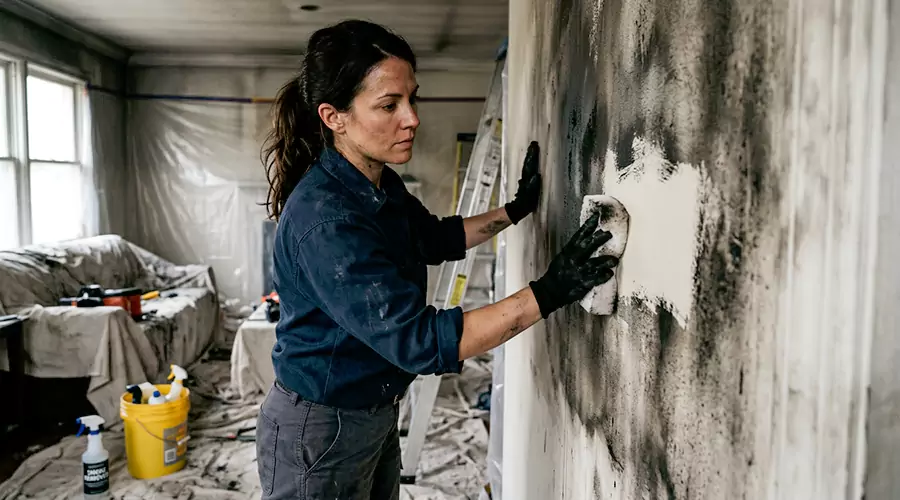
Smoke damage on walls should be cleaned in stages, starting with loose soot removal before any damp washing begins. Dry residue can smear into paint when it is rubbed with water too early. Light smoke staining may be cleanable, while heavy soot or damaged drywall may require more extensive repair. Smoke and water damage restoration can address both smoke residue and water-related damage when firefighting efforts have affected the walls.
Smoke residue can spread far beyond the room where a fire started. It may settle along ceilings or around air registers. The right cleaning method depends on the wall finish and the type of residue.
What Should You Do Before Cleaning Smoke-Damaged Walls?
Before cleaning begins, confirm that the building is safe to enter and that damaged electrical areas are not a hazard. Wear gloves and suitable respiratory protection when ash or fine soot is present. Keep children away from the cleanup area because disturbing residue can put particles back into the air.
Prepare the room before touching the walls:
- Photograph visible staining before cleanup.
- Cover clean floors and nearby furniture.
- Keep heavily affected rooms separated.
- Check the wall for heat or water damage.
- Test any cleaner in a hidden spot.
If the drywall is charred or sagging, cleaning should not be the first step. Those conditions point to material damage rather than a surface stain.
How Do You Remove Loose Soot From Walls?
Loose soot should be removed with the least aggressive dry method first. A HEPA-type vacuum can collect fine particles without ordinary sweeping. Hold the nozzle slightly away from the wall so it does not drag soot across the paint. EPA guidance favors HEPA-type vacuuming when fine ash is present. A dry chemical sponge can then lift residue from many painted surfaces. Use straight passes with light pressure. Rotate the sponge as each face becomes dirty instead of rubbing the same loaded section across the wall. This dry-first approach is especially useful for cleaning smoke damaged walls because moisture can turn loose soot into dark streaks.
How Should Remaining Smoke Stains Be Washed?
After loose soot is gone, washable walls can be cleaned with a mild detergent that suits the finish. Work in a small test area first. Use a damp cloth rather than soaking the wall because excess water can damage drywall or leave marks on flat paint.
A practical sequence is:
- Start at the top of the affected section.
- Clean one small area at a time.
- Wipe in controlled straight passes.
- Change dirty cloths frequently.
- Dry the wall after each section.
The Red Cross recommends mild soap or detergent for soot and smoke on walls. Stronger products need careful label use because some can damage finishes or irritate skin.
Can Every Smoke-Damaged Wall Be Cleaned?
No. Surface residue can often be cleaned, but heat damage or deep contamination may make repair more practical. Painted drywall is porous beneath its finish. Smoke odor can remain inside the paper layer even after the visible stain has improved.
| Wall Condition | Likely Response |
|---|---|
| Light surface film | Dry clean then wash |
| Moderate washable soot | Clean and reassess |
| Persistent stain | Prime after full cleaning |
| Soft drywall | Evaluate for replacement |
| Charred paper facing | Replace damaged section |
| Strong returning odor | Check deeper materials |
Smoke damage repair should address contaminated material before cosmetic refinishing starts. Painting directly over dirty soot can leave odor behind and allow staining to bleed through.
What Signs Mean the Smoke Damage Is More Serious?
Serious smoke damage often shows up after the first cleaning pass. Stains may return or odor may build when the room stays closed. Residue around vents can also show that smoke traveled beyond the visible fire area.
Watch for these signs:
- Black residue returns after wiping.
- Smoke odor becomes stronger overnight.
- Soot appears around air registers.
- Wall paint blisters or peels.
- Drywall feels soft.
- Several rooms show the same residue.
- The paper facing looks burned.
- Firefighting water entered the wall.
- Cleaned surfaces still transfer dark residue.
Fixing smoke damage becomes more difficult when soot has reached insulation or concealed wall cavities.
What Can You Check Yourself After Cleaning?
A white-cloth transfer test can show whether an accessible wall still has loose surface residue. Let the cleaned area dry fully first. Press a clean white cloth lightly against the wall and make one short wipe. If gray or black material transfers, the surface needs more cleaning. If the cloth stays clean but odor returns after the room is closed for several hours, the remaining source may be deeper than the paint. This test helps assess smoke damage on walls but cannot confirm the condition inside a closed cavity.
When Should You Call a Professional?
Professional assessment is appropriate when soot covers several rooms or smoke entered HVAC components. It is also appropriate when drywall is charred or heavily wet from firefighting. FEMA guidance recommends professional restoration when heavy smoke contamination remains after detailed household cleaning.
Consider help when:
- Heavy soot covers large wall areas.
- Electrical fixtures were exposed to fire.
- Smoke odor persists after repeated cleaning.
- Insulation may be contaminated.
- Drywall has lost strength.
- Previous cleaning attempts failed.
Smoke damage cleaning can require different methods for oily residue than for light dry soot. Aggressive cleaning can damage paint without removing the source.
How Can You Prevent Soot From Spreading During Cleanup?
Containment keeps a manageable wall-cleaning job from becoming a larger problem. Avoid carrying dirty tools through clean rooms. Do not run an HVAC system that is visibly releasing soot because airflow can redistribute particles.
Useful habits include:
- Clean higher areas before lower sections.
- Keep clean cloths separate from used ones.
- Bag used soot sponges.
- Change heavily soiled gloves.
- Clean tools before changing rooms.
Conclusion
Smoke-damaged walls can often be restored when soot remains near the surface and the drywall is still sound. Start with dry particle removal before using a suitable damp cleaning method. Check the wall again after it dries because returning odor can reveal deeper contamination. If the drywall is charred or heavily saturated, professional assessment can help determine whether cleaning or replacement is appropriate.
Frequently Asked Questions
Can you use water to clean soot from walls?
Yes, but only after loose soot has been removed. Wetting dry soot too early can smear it into the finish.
Can you paint over smoke stains?
Only after the wall has been cleaned and dried. A stain-blocking primer can be used when discoloration remains after source cleaning.
Will smoke odor leave drywall on its own?
Light odor may fade after cleaning and ventilation. Persistent odor can mean residue remains inside porous material.
Does smoke-damaged drywall always need replacement?
No. Firm drywall with surface staining can often be cleaned. Charred or weakened drywall is a stronger replacement candidate.
Can a regular vacuum remove soot?
A standard vacuum can release fine particles back into the room. HEPA-type filtration is the safer choice for fine ash or soot.
Why do smoke stains return after cleaning?
Residue may remain below the surface or inside nearby materials. Incomplete cleaning can also allow staining to reappear.